A house in Misimiliana: Discovery practices
Keywords:
descubrimiento, arte, naturaleza, exposición, intercisciplinarSynopsis
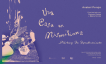
Catalogue of Anabel Perujo’s exhibition “A House in Mismiliana, Practices of Discovery” at the Chema Cobo Exhibition Hall of the Faculty of Fine Arts, which took place from 19 June to 13 September 2025. The exhibition brings together a series of production experiments that allow us to observe the fascinating methodology behind her doctoral research: processes of observation, recording, construction and assembly, which give form to her intervention in the Chema Cobo Gallery, comprising a sequence of installation, sculptural and video works. The exhibition’s title refers to the geographical area—Mismiliana, now Bezmiliana, stretching from the castle to the rocky outcrops—from which these processes of observation were captured. The artist chooses its ancient, stripped-down and still mythical name, from a time when the territories were being explored and demarcated, and doubts still lingered regarding their ownership and hidden value. *The Treasure Cave* capitalises on this idea, as it connects the legendary childhood dream with the studies of Professor Manuel Laza, the archaeological research still underway at that intersection where adults with agency coexist with children’s fascination with resources, imagination, intuition and talking animals. Thus, through theoretical frameworks such as those offered by Donna J. Haraway, Anna Tsing and Graham Harman, Anabel Perujo draws out new perspectives on narrating our coexistence with the territory, particularly with regard to the dichotomy between the natural and the artificial, the given and the constructed, and the relationships between beings — human and non-human — in a modern environment where these boundaries are unclear. This stance is also a creative position; a hybrid and ambiguous one, which requires improvisation, experimentation and trials that sometimes fail and cannot be realised.
Downloads
Download data is not yet available.
References
Laza Palacio, M. (2005). El hombre que creía saber dónde había un tesoro. Airon Sesenta.
Tsing, A. L. (2021). La seta del fin del mundo: Sobre la posibilidad de vida en las ruinas capitalistas (F. J. Ramos, Trad.). Capitan Swing.
Downloads
Published
July 21, 2026
Categories
Copyright (c) 2026 Los autores conservan los derechos de autoría y otorgan a la editorial Universidad de Málaga derechos no exclusivos de reproducción, distribución, comunicación pública y transformación -este último sólo para el caso de que fuera necesaria alguna adaptación para su publicación- se difundirá con la licencia de reconocimiento de Creative Commons que permite compartir la obra con terceros, siempre que estos reconozcan su autoría. Los autores/as cuyas contribuciones sean aceptadas para su publicación en esta monografia conservarán el derecho no exclusivo de utilizar sus contribuciones con fines académicos, de investigación y educativos, incluyendo el auto-archivo o depósito en repositorios de acceso abierto de cualquier tipo.
License

This work is licensed under a Creative Commons Attribution-NonCommercial 4.0 International License.
Details about this monograph
ISBN-13 (15)
978-84-1335-500-9